Cosmic pollution produces Devilish dusty delusions, my talk at Google. 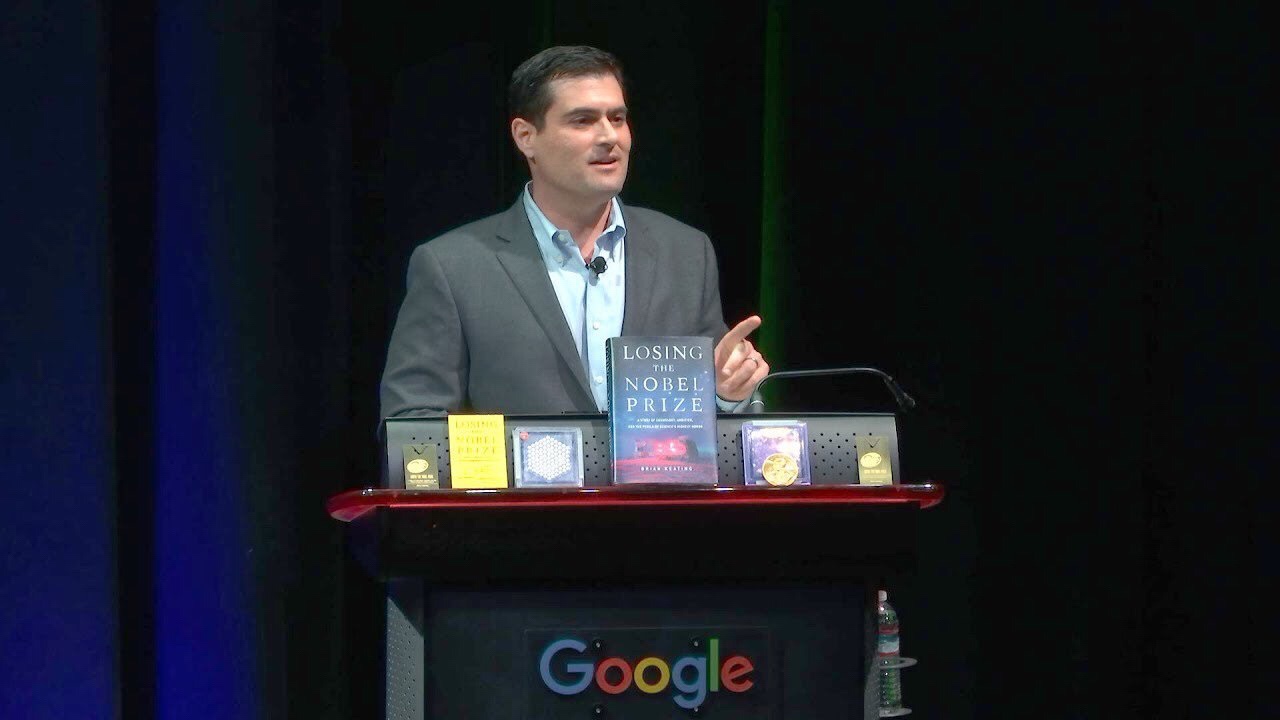
Author: Brian Keating
-
Dusty Delusion Destroys Nobel Prize
-
10 Drafts Later: Making it to Amazon’s Top 10 Best Books!
When I began writing Losing the Nobel Prize, I wasn’t sure I could complete it. I had a day job and a family and wanted to have a life. But I also had a contract to write a draft in under 16 months which I thought was insane. The saving grace: I “only” needed to produce 70,000 words.
I sighed a big sigh of relief and dug in figuring that, at a thousand-word-per-day clip, I’d be done in under three months. That wold leave me more than a year to edit, proof-read, and bask in the glory of a completed work.
Oh, how wrong I was!
It ended up taking ten drafts and more than 12 months to write, plus three more to edit. It finally weighs in at nearly 90,000 words and has over 60 pictures/illustrations that, all told, make up the book.
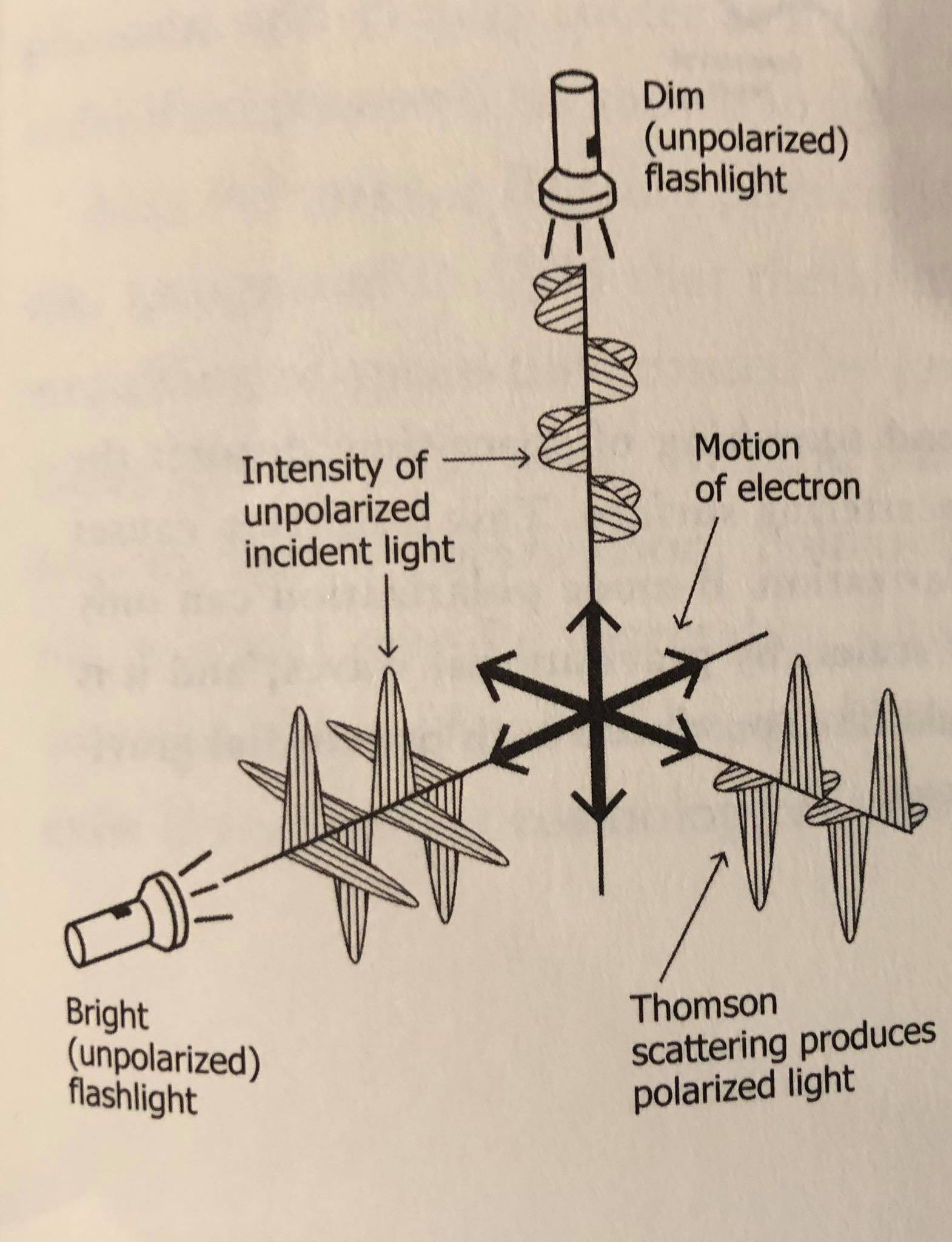
One of the 50-plus custom-made illustrations made by graphic artist, Shaffer Grubb. 6 things I underestimated:
- How hard it is to get permissions to historical images such as Hubble’s iconic “VAR” plate, Ansel Adams’ portraits of Margaret Burbidge, and many others.
- How much work, (and money!), it takes to produce illustrations that explain the scientific ideas I was trying to communicate.
- How long it takes to edit and proofread and copy-edit a manuscript, even one that’s only 90,000 words!
- How much time it takes to properly acknowledge the ~300 people who played a fundamental role in the outcome of the book!
- How much energy, resources, and time it takes
- How much pride and fulfillment I would feel when I finally held the finished product in my hands — my first book — and found out it was ranked as one of the Ten Best Nonfiction Books on Amazon.com! When I look at the nine other authors on the list (all of whom have authored best-selling books before), I am truly humbled to be ranked alongside them…
4 things I overestimated:
- The pain of the copyedit process. I was afraid that copyediting would feel like a cross between a proctology exam and an IRS audit. Thanks to the skillful work of the inimitable Allegra Huston, who’s also an amazing writer herself, the process not only wasn’t painful, but I learned a tremendous amount about writing from her. Plus, Allegra being a non-scientist, was able to point out aspects of my explanations when they might possibly confuse the lay reader.
- How easy it would be to get some permissions, including the full color pictures of the Nobel Prize I use in the “color insert” in the middle of the book.
- How agreeable my publisher would be to publishing 8 full pages of richly colored photos, and to adding color coded chapters so my readers could “Choose their Own Adventures”, skipping parts they might not be as fascinated with to get to the other stuff they are passionate about.
- How hard it would be to get “blurbs” or endorsements for the book from almost two dozen of the world’s most distinguished scientists, writers, and thinkers. I’m overwhelmed at how positive their response was and I am forever in their debt for the advice and encouragement they provided!
In all this, I had help from a huge and experienced team at W.W. Norton. I can’t ever repay the fantastic folks at Norton, from my two editors Jeff Shreve and Quynh Do, to my publicity team Erin Lovett and Steve Colca. These are the hardest working people in the business and they exemplify the professionalism that is so rare in today’s cutthroat publishing world.
Now, comes the time when the book goes out in the world and has a life of its own. Look for some “book trailers” produced by my friend, the incomparable director Debra Kellner and some appearances on blogs and podcasts.
I hope my book will have a successful journey, and inspire all those who are on a quest for greatness. My hope for my readers is to realize what really matters, in life or in the lab, is not the golden prize you may (or may not) get at the destination, but rather the connections you make with your fellow travelers along the way. I’m so grateful for the chance to take this adventure with you! Please stay in touch via my mailing list, available on my website:BrianKeating.com, on Twitter, and on my Amazon Author website.
THANK YOU!
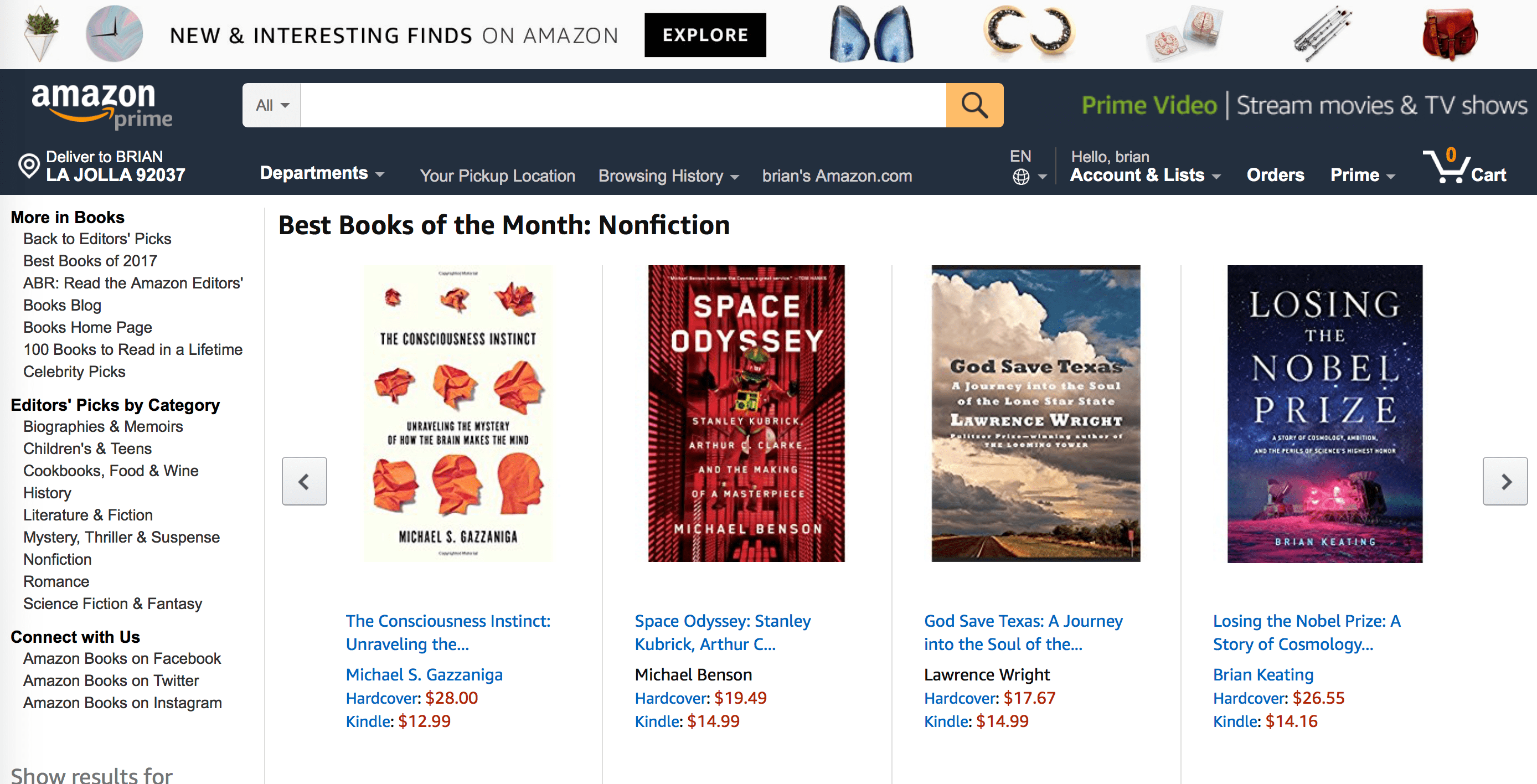
The Promised Land: An Amazon “Top Ten Best Book of the Month”! First Time Author’s Surprising Recipe: 10 Drafts + 1 Year of Writing = 1 of Amazon’s 10 Best Books of the Month!
-
Interview with KCBS
I had an opportunity to discuss the James Webb Space Telescope with Jennifer Hodges of KCBS in San Francisco. A recording of the interview is available here:
-
No Atheists in the Matrix: An Easter Egg from the Master Simulator!

Here’s a link to a fun talk I gave two years ago on Easter at the Sunday Assembly in San Diego. In it, I discuss the multiverse and the simulation hypothesis. I hope you’ll like it!
-
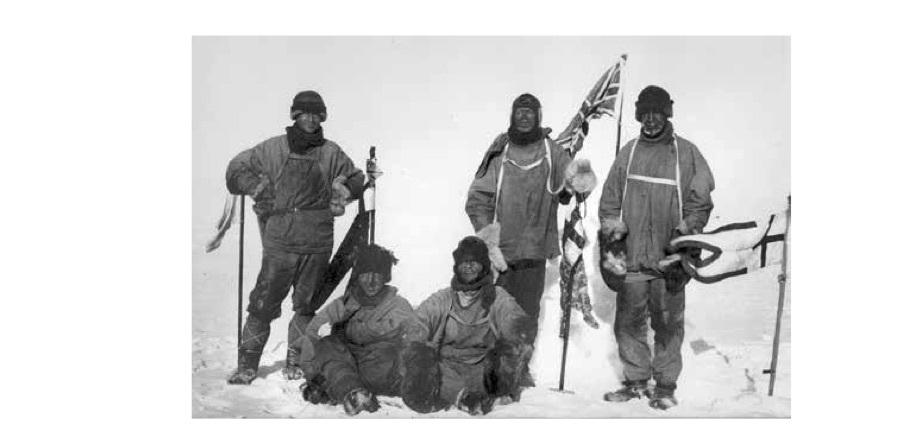
Rest in Peace: Robert Falcon Scott, died OTD in 1912
From my upcoming book, Losing the Nobel Prize:
“After his first failed, attempt to reach the pole Robert Falcon Scott declared: “I may as well confess that I had no predilection for polar exploration.”
After his second, successful attempt in 1912 he said, “Great God this is an awful place and terrible enough for us to have laboured to it without the reward of priority.”
Antarctica is unforgiving of mistakes. One of Scott’s biggest was his utter devotion to the scientific goals of the expedition. When he lost the Pole to Amundsen, he was depressed, but he could console himself with the prospect of the mission having achieved scientific success: the vast collection of Antarctic artifacts they collected. Yet even these samples contrib- uted to his demise. Weighed down by sleds full of rocks, animal carcasses, and other specimens destined for London’s Natural History Museum, the Englishmen moved even more slowly as the days passed. Though he lost the pole to Amundsen, who’d arrived nearly a month earlier, as Scott hoped, their artifacts did indeed make it to the Natural History Museum. But they bore a cost higher than any scientific expedition should suffer—they ended up dying for science.”
-
Jews You Should Know
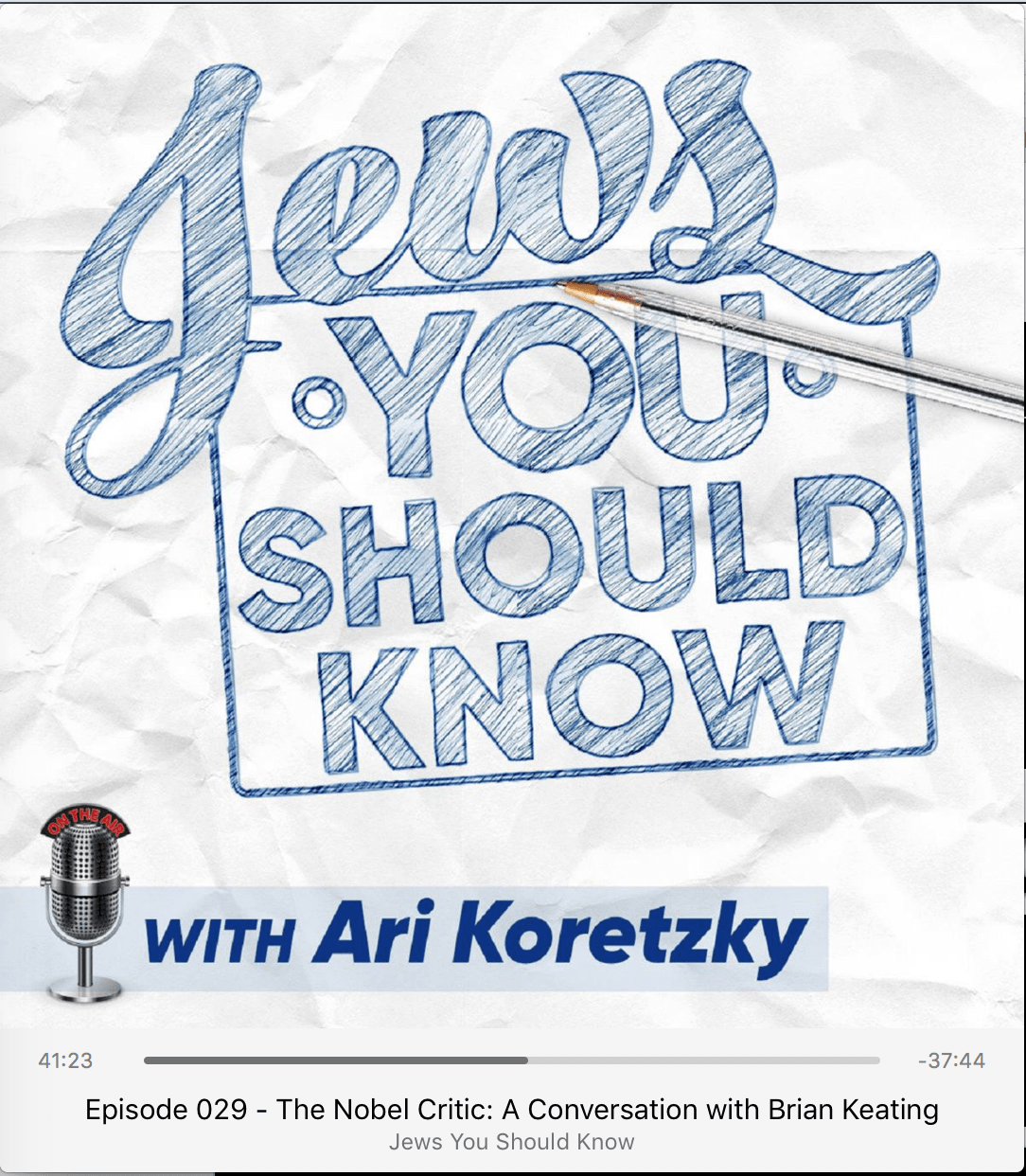
I had the great honor to discuss my upcoming book and some of its Jewish themes on the Jews You Should Know podcast, with Rabbi Ary Koretzky. In it, we cover light subjects such as God and Science, Catholicism and Judaism, Stephen Hawking, and of course, the Nobel Prize!
Apple Podcasts: https://itunes.apple.com/us/podcast/jews-you-should-know/id1274250823?mt=2#episodeGuid=16aa70324f9626f22a5cd1ce0e86e0f1
Direct download: http://traffic.libsyn.com/jewsyoushouldknow/Brian_Keating_-_FULLY_EDITED.mp3
-
The Legacy of BICEP2, Four Years Later: EDGES, LIGO, & beyond.
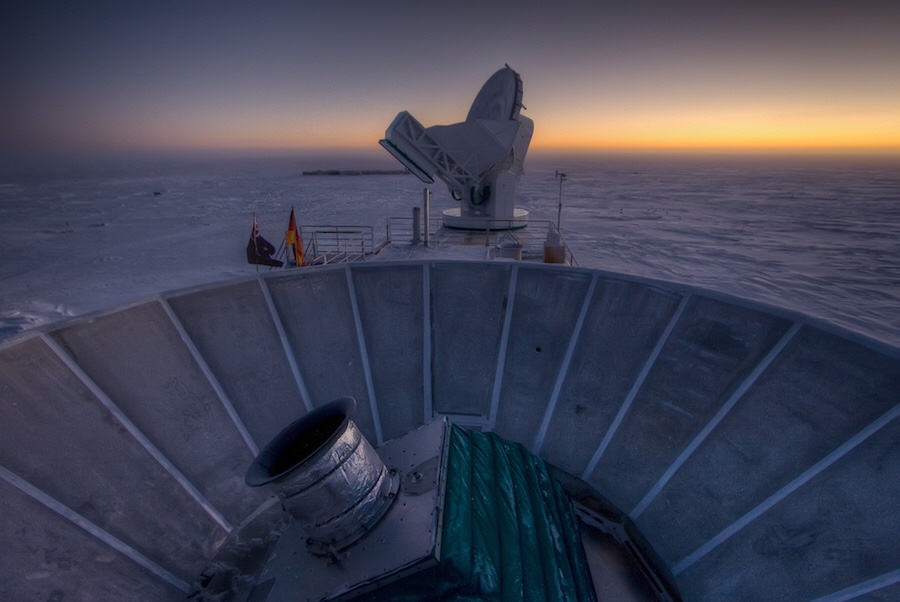
Andrew Grant wrote a very nice in Physics Today, giving a great summary of the lasting, long range impact of the BICEP2 experience.
Grant’s piece appears exactly four years after the momentous announcement made at Harvard’s Center for Astrophysics. That announcement made headlines around the world, shaking up the normally-staid astrophysics community.
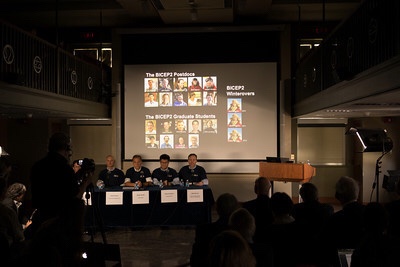
It’s intriguing to see the impact that our vetting, publicity, and publication process had on two other astronomical astonishing announcements, one by the LIGO experiment and the other, more recently, from the EDGES experiment.
Perhaps one of the most long-lasting effects of BICEP2 will be as a cautionary tale, one that has truly penetrated the subconscious of Experimental astrophysicists everywhere.
https://physicstoday.scitation.org/action/showDoPubSecure?doi=10.1063%2FPT.6.3.20180316a&format=full
-
Wrinkle in Time: Science Advisor Stephon Alexander
A fascinating, behind-the-scenes glimpse into the making of a major Hollywood blockbuster, a Wrinkle in Time, courtesy of Brown University’s YouTube Channel. Can’t wait to see the movie!
 keating ai